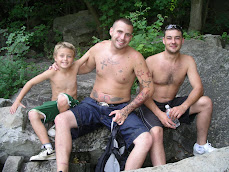
First, a big “Thank You” goes out to my 85-year-young dad. Yes, it’s Father’s Day, and I love him; but today’s thanks is for the love of music generated throughout my life by both him and my mother. Not a day went by without music in their home.
That love of music is a legacy I will enjoy until I’m at least 85, I hope! Although not presently singing in any public setting, I have been discovering a wealth of local singers/songwriters in the last few weeks. It’s mind-boggling how much fantastic talent is available in this area alone!
We’ve been touched for several years by the beautiful singing and strumming of a father (guitar) and son (violin) on the streets and stages of Ukiah – Brad and Julian McClanahan. This father definitely has encouraged a love of music not only in his son and family, but all of us co-workers and fellow citizens as well.
Now formally joined by Michael Charnes and known as The Julian Trio, their lilting and lovely Celtic-influenced tunes, plus other folk-style music is impressive, especially knowing that their songs are original compositions. This father-son music cooperative is very enjoyable to see and hear!
Their recent release, Lighthouse on a Cliff, contains wonderful instrumentals – lovely waltzes are my favorite, and nice vocal arrangements invoking a timeless connection to nature and harmony with those we love. Some songs openly honor family members: Annalise’s Waltz and Momma’s Mandolin, for example.
In fact, Julian’s first composition was at age four (“I Love Mama”) and by age seven was performing original songs in public with Dad. Now, at age ten, Julian will be traveling with his family to live in Mexico while Brad takes a sabbatical from teaching at Ukiah High School. Our love and best wishes go with them!
Of course, there are many other performers – too numerous to feature in this article, who bring wonderful music to our theaters, restaurants, parks and churches - for those willing to go and listen. Making it out to Ukiah Brewing Company’s open mic lately reaped connections for me to some excellent singers and musicians.
Former Ukiah mayor Sheridan Malone sang his “swan songs” last month before moving back East (for only two years, he says), and I was fortunate to hear some of his very creative pieces; especially entertaining was “Retread.” You can just imagine using such a metaphor for a love gone bad. Written by an auto-parts-kind of guy, of course. I was in stitches.
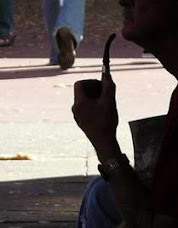
These Wednesday evenings hosted by Jim Tuhtan (of Jitterbox Music) feature lots of good musicians, another of which was Patrick Nagel. Patrick entertains Ukiahans at many local events. Pictured here, he serenades passersby at the recent Pastels on the Plaza in Ukiah's Alex Thomas Plaza.
Patrick’s presence online is extensive – check it out at http://www.nagelations.com/home.html. His music has been honored several times by web audiences through www.garageband.com. Cdbaby.com also features his work. Haunting, romantic lines like this strike a chord in my heart, along with many other listeners, I’m sure: “…if I could sit beside you, we’d heal your broken heart with love.”
Through these contacts, I also discovered several intimate venues that give opportunities to professional, established musicians traveling through this area – house concerts. At one large, older home in downtown Ukiah, I enjoyed an evening listening to Dana Lyons, a favorite of many local music enthusiasts.
His compositions are terrifically witty, often absurd, but entirely refreshing! Many songs are also serious and caution listeners to put first important things like family, good communication and harmony with nature. But…then there is a worldwide favorite like “Cows With Guns.”
This extreme misadventure of a “cow guru” who has had enough from humans, is filled with wit, humor, and laughingly bad puns. It was purloined by online video artists, but through Dana’s insistence, now credits his songwriting in their world wide web hit production and a YouTube favorite!
I don’t know about you, but I am ready for a big, robust summer of music. And, you don’t have to leave Ukiah to find it. Our music fix can be satisfied every week, in fact. New this summer and alternating with our bi-weekly Sunday Concerts in the Park is Spencer Brewer’s Acoustic Café every other Saturday evening in the Ukiah Music Center’s back courtyard.
A free, cabaret-style setting, these concerts feature many local performers Kitty Rose, The Bootniks, Alex de Grassi, Top Shelf, Rootstock, Bejazzled, Will Siegel & friends, Paula Samonte, and, of course, Spencer and his fellow pianists!
Music is one of the finest ways to bring people together. Eat, drink, and sing along this summer! And, thanks again, Dad, for making that musical connection.
Sunday, June 17, 2007


Sunday, May 27, 2007
Mendocino Word Lovers, Celebrate!
Confess! Admit you’re a word lover – or you wouldn’t be reading right now, perhaps. If you’re like me, you can’t possibly keep up with all the good books or authors out there; but, we keep trying!
Mendocino County’s most recent effort to help us is with the upcoming 2007 “Celebration of Word Lovers: Mendocino LitFest.” We’re in for a converging of emergent and established writers – sharing with us their poetry, memoirs or novels. And, this celebration is not just for some, but for all ages.
Many have read and revered the words of Gary Soto as we’ve grown up, with his California settings providing the backdrop for teen angst and family conflict. The keynote speaker of the LitFest, Soto will share with us as fellow humans and hopefully inspire fellow writers as well.
Another of my favorite authors in the Lit event is Dylan Schaffer – also a Californian. His two witty whodunits “Misdemeanor Man” and “I Right the Wrongs” are among the books I share with friends most often. Plus, he’s been featured in my column more than once.
The author lineup contains a couple dozen local and regional writers whose work is vast in its array of styles and topics. Check out all the biographies on the LitFest website. Editors and publishers will also be presenting vital information to aspiring writers who attend. Print out the event and workshop schedule available online. Click on www.mendolitfest.org/index.html.
A first-time book author, Claudia Crosetti, will be displaying her recently published “Rocks in My Pockets: Travels with Dad” at her own LitFest vendor booth. Since she isn’t featured on the website, I wanted to find out more about her publishing venture, so I interviewed Claudia and subsequently read her travel memoir.
Initially written as a journal of her trip to Italy with her father, Victor, her family suggested she publish for present and future relatives to enjoy. She found herself weaving in with that journey an earlier trip she took that also changed her life – with fellow breast cancer survivors to Argentina’s Mt. Aconcagua.
In Italy, Claudia and her father journey by foot and rail, disregarding more typical tourist paths. Visiting Venice with its canals and complete lack of vehicles then winding their way down to Rome with its “open, expansive” feel, the father-daughter duo indulges in the stimulating sights, sounds - and tastes.
Staying mostly in small apartments (pensiones), her detailed, colorful descriptions of their travels are eye and ear-candy for many of us who will never go there, each day usually beginning with a cappuccino and ending with another flavor of gelato. Of course, in between, we learn of strength and survival - not only of physical culture, but of personal growth as well.
Claudia feels anyone can benefit from creating their own travel or personal journals; it helps us to maintain perspective, she advises. She was fortunate to have a mentor writer who encouraged her to take it a step further. Although she admits her final composition was a “fun, but sometimes agonizing process,” she is now ready to partake of the fruits of her labor.
Deciding to “print on demand” through iUniverse (http://www.iuniverse.com/) was a positive experience. Although Claudia discovered how much work is involved – like many other writers who may even have their books bought by larger publishers today, she is not daunted by the marketing and schmoozing that writers must do to sell their own product.
She is proud of her hard work, of “taking the reader on two ventures,” and hopes they will enjoy the ride. Her blog is now set up for potential perusers and purchasers at ccrosetti.blogspot.com. Plus, she will be reading at our local Mendocino Book Company on Thursday evening, June 21st at 6:30 p.m. where her book is available, in addition to Amazon and Barnes & Noble’s online stores.
Another local woman writer will feature her first book in a LitFest vendor booth. Mary Zellachild, whose information is also not included in the festival’s billing, will be showcasing her novel, “Transitions.”
Her story focuses on a “sense of place and nature – a spiritual connection” as she follows three cousins who return to a grandparent’s property on the Mendocino Coast they now inherit as fifty-something’s. We flash back to their youth and learn – with them, of those vital human and land connections that years of living cannot erase.
Zellachild’s personal life exhibits these firm beliefs through her efforts on the coordinating committee of the Willits Economic LocaLization (W.E.L.L.) movement. In addition to her job working for international agri-businessman John Jeavons, she is now marketing her novel which she self-published. It will be available soon at local stores, plus online at Booklocker.com/books/2883.html.
So, all you word and book lovers, please mark your calendar for this Friday and Saturday’s events held at the Mendocino College campus. Celebrate our local writers!
Mendocino County’s most recent effort to help us is with the upcoming 2007 “Celebration of Word Lovers: Mendocino LitFest.” We’re in for a converging of emergent and established writers – sharing with us their poetry, memoirs or novels. And, this celebration is not just for some, but for all ages.
Many have read and revered the words of Gary Soto as we’ve grown up, with his California settings providing the backdrop for teen angst and family conflict. The keynote speaker of the LitFest, Soto will share with us as fellow humans and hopefully inspire fellow writers as well.
Another of my favorite authors in the Lit event is Dylan Schaffer – also a Californian. His two witty whodunits “Misdemeanor Man” and “I Right the Wrongs” are among the books I share with friends most often. Plus, he’s been featured in my column more than once.
The author lineup contains a couple dozen local and regional writers whose work is vast in its array of styles and topics. Check out all the biographies on the LitFest website. Editors and publishers will also be presenting vital information to aspiring writers who attend. Print out the event and workshop schedule available online. Click on www.mendolitfest.org/index.html.
A first-time book author, Claudia Crosetti, will be displaying her recently published “Rocks in My Pockets: Travels with Dad” at her own LitFest vendor booth. Since she isn’t featured on the website, I wanted to find out more about her publishing venture, so I interviewed Claudia and subsequently read her travel memoir.
Initially written as a journal of her trip to Italy with her father, Victor, her family suggested she publish for present and future relatives to enjoy. She found herself weaving in with that journey an earlier trip she took that also changed her life – with fellow breast cancer survivors to Argentina’s Mt. Aconcagua.
In Italy, Claudia and her father journey by foot and rail, disregarding more typical tourist paths. Visiting Venice with its canals and complete lack of vehicles then winding their way down to Rome with its “open, expansive” feel, the father-daughter duo indulges in the stimulating sights, sounds - and tastes.
Staying mostly in small apartments (pensiones), her detailed, colorful descriptions of their travels are eye and ear-candy for many of us who will never go there, each day usually beginning with a cappuccino and ending with another flavor of gelato. Of course, in between, we learn of strength and survival - not only of physical culture, but of personal growth as well.
Claudia feels anyone can benefit from creating their own travel or personal journals; it helps us to maintain perspective, she advises. She was fortunate to have a mentor writer who encouraged her to take it a step further. Although she admits her final composition was a “fun, but sometimes agonizing process,” she is now ready to partake of the fruits of her labor.
Deciding to “print on demand” through iUniverse (http://www.iuniverse.com/) was a positive experience. Although Claudia discovered how much work is involved – like many other writers who may even have their books bought by larger publishers today, she is not daunted by the marketing and schmoozing that writers must do to sell their own product.
She is proud of her hard work, of “taking the reader on two ventures,” and hopes they will enjoy the ride. Her blog is now set up for potential perusers and purchasers at ccrosetti.blogspot.com. Plus, she will be reading at our local Mendocino Book Company on Thursday evening, June 21st at 6:30 p.m. where her book is available, in addition to Amazon and Barnes & Noble’s online stores.
Another local woman writer will feature her first book in a LitFest vendor booth. Mary Zellachild, whose information is also not included in the festival’s billing, will be showcasing her novel, “Transitions.”
Her story focuses on a “sense of place and nature – a spiritual connection” as she follows three cousins who return to a grandparent’s property on the Mendocino Coast they now inherit as fifty-something’s. We flash back to their youth and learn – with them, of those vital human and land connections that years of living cannot erase.
Zellachild’s personal life exhibits these firm beliefs through her efforts on the coordinating committee of the Willits Economic LocaLization (W.E.L.L.) movement. In addition to her job working for international agri-businessman John Jeavons, she is now marketing her novel which she self-published. It will be available soon at local stores, plus online at Booklocker.com/books/2883.html.
So, all you word and book lovers, please mark your calendar for this Friday and Saturday’s events held at the Mendocino College campus. Celebrate our local writers!
Sunday, May 6, 2007
Civility is a choice
It’s the simple things in life that can give great rewards. Forget bouquets and trophies; most of us are grateful for good manners or kind words spoken to us by – anyone.
Feeling worn on a recent Friday afternoon, a few teacher friends and I found ourselves cheering a bit (good food and drink helped, too) as we recalled thoughtful parting comments from our day’s “clients.”
“Several students leaving my classes today stopped to tell me, ‘Have a good weekend, Ms. Warda.’”
Those teens, chatting and chipper, had the anticipation of the upcoming prom stirring in their souls, yet some made the effort to grace their tired old teacher with a positive farewell; they had no idea how much that means. Just when you want to give up, give out or give in – a kind word helps. It is refreshing to see that some parents have modeled good manners to their young.
Humans do not naturally act altruistic; it’s not an instinct for us, I believe. Our species has survived in part due to its cunning and strategy. Kindness doesn’t put you on top of the food chain.
I can post my BP Rules all over my classroom and point to them every day, but that won’t necessarily make students “Be Prompt, Be Prepared, and Be Polite!” But, I can model and mention them – and hope they CHOOSE to obey these Basic Principles.
Civility can win you friends and create harmony, but may not propel you up the career ladder or help you make your first million any quicker. Yet, if you study the psychology of good manners, you find that ego IS what often develops kind natures.
We learn when very young, hopefully, that saying “please” and “thank you” may bring us success. We may get what we want by saying those “magic” words. At least, it increases our odds and usually works on folks when we’re children, anyway.
Admit it – even as adults, we’ve all buttered up somebody of whom we want to ask a favor. Weren’t we taught that you get more by using honey than vinegar? So…being polite is usually good for us. Then, why are there so many doggone rude people in our world?
The big EGO is to blame for that as well. When we think so much of ourselves that we can’t imagine being the other person, we may not treat them as we’d like to be treated. We know the Golden Rule; but a strong sense of self may also prevent us from doing the kind deed or being generous at our expense.
I just finished one of the most entertaining nonfiction books I’ve read in a long time – hands down! It’s called “Talk to the Hand” by Lynne Truss, a British woman with a great sense of humor and wit.
Much of today’s rudeness is because we don’t think of other people; we cannot possibly be polite without consideration of others’ feelings. We all know we can’t give everyone what they want; life’s disappointments are often our reality. But, the importance of the “other” is monumental within society; we are social creatures who must adhere to basic civility or forfeit any possible joy or satisfaction of life on this planet.
Truss discusses many scenarios where civility – or lack of it affects us. At one point, she talks about being kind to retail clerks, especially if they serve you right after another customer has mistreated them. If you try to sympathize, she relates that their response may not be the one you expect because, sadly, many folks in retail can only survive by not noticing or caring about a customer’s rudeness.
“This makes it quite hard to go through the ensuing politeness display without feeling self-conscious, or even quaint. ‘May I please have it wrapped separately?’ you ask, with your smile fading. ‘Thank you, that’s perfect, how kind you are.’ The ground starts to slip from under you, as no validating response comes your way, yet you are powerless to stop being polite and old-fashioned. ‘And what a fine morning, forsooth!’ you exclaim. ‘Ha. By God’s breath, thou hast a cunning way with yon mechanical abacus! Hast thou a quill-pen prithee? Or mayhap I must digitate upon yon artful keypad?’” (Her digression into Shakespearean style is especially witty to Anglophiles!)
Unlike the “old days” where only face-to-face communication existed, we now can be rude to anyone in the world via the internet. When we are faceless and anonymous, there is not the same need to treat people with consideration.
Someone has even proposed a Blogger Code of Conduct, which discourages postings online that we wouldn’t say in person. Check it out on this website - http://radar.oreilly.com/archives/2007/03/call_for_a_blog_1.html
Well, that might eliminate a few…but some mighty rude comments are made everyday to our faces, as well as on blogs, in chat rooms, or on the air by people who have too much ego and not enough basic social graces. Not everyone makes it into the headlines like Don Imus.
Give people their free speech; however, wouldn’t it be nice if we chose to say things which made the world a better place?
Feeling worn on a recent Friday afternoon, a few teacher friends and I found ourselves cheering a bit (good food and drink helped, too) as we recalled thoughtful parting comments from our day’s “clients.”
“Several students leaving my classes today stopped to tell me, ‘Have a good weekend, Ms. Warda.’”
Those teens, chatting and chipper, had the anticipation of the upcoming prom stirring in their souls, yet some made the effort to grace their tired old teacher with a positive farewell; they had no idea how much that means. Just when you want to give up, give out or give in – a kind word helps. It is refreshing to see that some parents have modeled good manners to their young.
Humans do not naturally act altruistic; it’s not an instinct for us, I believe. Our species has survived in part due to its cunning and strategy. Kindness doesn’t put you on top of the food chain.
I can post my BP Rules all over my classroom and point to them every day, but that won’t necessarily make students “Be Prompt, Be Prepared, and Be Polite!” But, I can model and mention them – and hope they CHOOSE to obey these Basic Principles.
Civility can win you friends and create harmony, but may not propel you up the career ladder or help you make your first million any quicker. Yet, if you study the psychology of good manners, you find that ego IS what often develops kind natures.
We learn when very young, hopefully, that saying “please” and “thank you” may bring us success. We may get what we want by saying those “magic” words. At least, it increases our odds and usually works on folks when we’re children, anyway.
Admit it – even as adults, we’ve all buttered up somebody of whom we want to ask a favor. Weren’t we taught that you get more by using honey than vinegar? So…being polite is usually good for us. Then, why are there so many doggone rude people in our world?
The big EGO is to blame for that as well. When we think so much of ourselves that we can’t imagine being the other person, we may not treat them as we’d like to be treated. We know the Golden Rule; but a strong sense of self may also prevent us from doing the kind deed or being generous at our expense.
I just finished one of the most entertaining nonfiction books I’ve read in a long time – hands down! It’s called “Talk to the Hand” by Lynne Truss, a British woman with a great sense of humor and wit.
Much of today’s rudeness is because we don’t think of other people; we cannot possibly be polite without consideration of others’ feelings. We all know we can’t give everyone what they want; life’s disappointments are often our reality. But, the importance of the “other” is monumental within society; we are social creatures who must adhere to basic civility or forfeit any possible joy or satisfaction of life on this planet.
Truss discusses many scenarios where civility – or lack of it affects us. At one point, she talks about being kind to retail clerks, especially if they serve you right after another customer has mistreated them. If you try to sympathize, she relates that their response may not be the one you expect because, sadly, many folks in retail can only survive by not noticing or caring about a customer’s rudeness.
“This makes it quite hard to go through the ensuing politeness display without feeling self-conscious, or even quaint. ‘May I please have it wrapped separately?’ you ask, with your smile fading. ‘Thank you, that’s perfect, how kind you are.’ The ground starts to slip from under you, as no validating response comes your way, yet you are powerless to stop being polite and old-fashioned. ‘And what a fine morning, forsooth!’ you exclaim. ‘Ha. By God’s breath, thou hast a cunning way with yon mechanical abacus! Hast thou a quill-pen prithee? Or mayhap I must digitate upon yon artful keypad?’” (Her digression into Shakespearean style is especially witty to Anglophiles!)
Unlike the “old days” where only face-to-face communication existed, we now can be rude to anyone in the world via the internet. When we are faceless and anonymous, there is not the same need to treat people with consideration.
Someone has even proposed a Blogger Code of Conduct, which discourages postings online that we wouldn’t say in person. Check it out on this website - http://radar.oreilly.com/archives/2007/03/call_for_a_blog_1.html
Well, that might eliminate a few…but some mighty rude comments are made everyday to our faces, as well as on blogs, in chat rooms, or on the air by people who have too much ego and not enough basic social graces. Not everyone makes it into the headlines like Don Imus.
Give people their free speech; however, wouldn’t it be nice if we chose to say things which made the world a better place?
Wednesday, April 11, 2007
On the Winning Side - or Not
No, I’m not focusing on the recent Mendocino County's District Attorney election, in case my headline reflects ballot blues (well, maybe a little). As Albert Einstein said, “Not everything that can be counted counts, and not everything that counts can be counted.” Don’t know if that makes Keith Faulder feel any better, but he related to me some positive words a couple of days following the election - when he could’ve been “down” for the count.
Though his unsuccessful campaign was brief (compared to his main opponent), Assistant District Attorney Faulder paid the people of Mendocino County huge compliments. Since his career puts him more often in the path of those detained or accused of alleged crimes, he rarely spends much time in the company of such large groups of dedicated, upstanding citizens who respect his position. He enjoyed that immensely.
Faulder ran the race, he said, to “have the opportunity to pay back the people of this county for all the years of training and confidence” they’ve invested in him. Maybe next round, Keith.
“It’s not whether you win or lose, but how you play the game.” We say that about politics, yes, but for many across the globe, this famous sport philosophy is played out – or not – on fields and courts where physical prowess reigns. Could you or your parent be called a “good sport” or does ump-blasting and tongue-lashing brand you as a “bad sport?”
Only the tragic or shocking news stories ever make the big headlines, but there are a lot of “bad sports” who are reported to the National Association of Sporting Officials. You can check out some of the sordid details on this webpage: http://www.naso.org/sportsmanship/badsports.html.
In our local news, a positive headline on a recent sports page was balm to the injured eyes…Our local South Valley Falcons won the City of Ukiah High School Division basketball championship, thanks to a motivated group of young men.
In only their second season, this team has no gym or covered practice area – and with new coach Chris Miller coming onboard just three days before the first game, they were able to beat the odds. Theirs was a perfect season with 11-0. Kudos, guys! The rest of us should be inspired.
For students in need of good role models, healthy exercise or fair competition, being on a team like this is priceless. Too much negative rumblin’ has been souring the pool of young people in our area. Wearing red or blue on some of our streets can produce anything but a patriotic response. Unfortunately, several of my high school English students are riding the thin line that keeps them out of the jailhouse or the coffin. It’s sad.
A local home where friends were mourning the death of a recently shot twenty-year-old (whose “blues” have been rumored) was allegedly pelted with beer bottles hurled by young men “seeing red,” you might say. A concerned mother witnessed this and confided to me. Not even a hint of respect.
What makes it worse is the young man’s death involved local law enforcement rather than street enemies. How can this loss of young life not sadden the hearts of other young lives, no matter what color they wear?
Maybe we need to put every teen on a team of some game, proud of their “color” and play against each other with onlookers, coaches and umpires. It’s been said that as a species we still need to satisfy that hunter/gatherer role…win the prize to take home. But, there’s not a safe, legitimate way for all of us to do that now.
Some have parlayed the “good sport” philosophy into a more universal application, like Australia’s Social Justice Commissioner Dr. Bill Jonas did in his 1999 speech at a Sport and Human Rights Conference down under.
“We need to ask ourselves, first, what exactly is it about sport that we would wish to transfer to social and civil life? I want briefly to suggest two reasons…Firstly, sport is an arena where competition is governed by the rule of law. The laws are in general respected and…enforceable.”
Jonas’ second reason resonated with me as I read the papers and scoured online while monitoring the Masters Golf Tournament (had to watch Tiger – a good role model). We can take this lesson from Dr. Jonas and put it to good use in our justice halls, on our basketball courts and in our neighborhoods:
“Secondly, let me draw attention to the geometrical configuration of the Olympic symbol. Five circles of equal size yet of different colour; circles that overlap yet remain distinct. A fitting symbol of equality and difference. In sport, competitors start out at the same point - they are given equal opportunity.”
That should be our goal. We need to do more to move everyone up to the same starting point and give everyone a chance to win. Otherwise, we all lose.
Though his unsuccessful campaign was brief (compared to his main opponent), Assistant District Attorney Faulder paid the people of Mendocino County huge compliments. Since his career puts him more often in the path of those detained or accused of alleged crimes, he rarely spends much time in the company of such large groups of dedicated, upstanding citizens who respect his position. He enjoyed that immensely.
Faulder ran the race, he said, to “have the opportunity to pay back the people of this county for all the years of training and confidence” they’ve invested in him. Maybe next round, Keith.
“It’s not whether you win or lose, but how you play the game.” We say that about politics, yes, but for many across the globe, this famous sport philosophy is played out – or not – on fields and courts where physical prowess reigns. Could you or your parent be called a “good sport” or does ump-blasting and tongue-lashing brand you as a “bad sport?”
Only the tragic or shocking news stories ever make the big headlines, but there are a lot of “bad sports” who are reported to the National Association of Sporting Officials. You can check out some of the sordid details on this webpage: http://www.naso.org/sportsmanship/badsports.html.
In our local news, a positive headline on a recent sports page was balm to the injured eyes…Our local South Valley Falcons won the City of Ukiah High School Division basketball championship, thanks to a motivated group of young men.
In only their second season, this team has no gym or covered practice area – and with new coach Chris Miller coming onboard just three days before the first game, they were able to beat the odds. Theirs was a perfect season with 11-0. Kudos, guys! The rest of us should be inspired.
For students in need of good role models, healthy exercise or fair competition, being on a team like this is priceless. Too much negative rumblin’ has been souring the pool of young people in our area. Wearing red or blue on some of our streets can produce anything but a patriotic response. Unfortunately, several of my high school English students are riding the thin line that keeps them out of the jailhouse or the coffin. It’s sad.
A local home where friends were mourning the death of a recently shot twenty-year-old (whose “blues” have been rumored) was allegedly pelted with beer bottles hurled by young men “seeing red,” you might say. A concerned mother witnessed this and confided to me. Not even a hint of respect.
What makes it worse is the young man’s death involved local law enforcement rather than street enemies. How can this loss of young life not sadden the hearts of other young lives, no matter what color they wear?
Maybe we need to put every teen on a team of some game, proud of their “color” and play against each other with onlookers, coaches and umpires. It’s been said that as a species we still need to satisfy that hunter/gatherer role…win the prize to take home. But, there’s not a safe, legitimate way for all of us to do that now.
Some have parlayed the “good sport” philosophy into a more universal application, like Australia’s Social Justice Commissioner Dr. Bill Jonas did in his 1999 speech at a Sport and Human Rights Conference down under.
“We need to ask ourselves, first, what exactly is it about sport that we would wish to transfer to social and civil life? I want briefly to suggest two reasons…Firstly, sport is an arena where competition is governed by the rule of law. The laws are in general respected and…enforceable.”
Jonas’ second reason resonated with me as I read the papers and scoured online while monitoring the Masters Golf Tournament (had to watch Tiger – a good role model). We can take this lesson from Dr. Jonas and put it to good use in our justice halls, on our basketball courts and in our neighborhoods:
“Secondly, let me draw attention to the geometrical configuration of the Olympic symbol. Five circles of equal size yet of different colour; circles that overlap yet remain distinct. A fitting symbol of equality and difference. In sport, competitors start out at the same point - they are given equal opportunity.”
That should be our goal. We need to do more to move everyone up to the same starting point and give everyone a chance to win. Otherwise, we all lose.
Sunday, March 25, 2007
Nature and Hospitality Merge in Beauty
Homer Barton would be pleased. If he could come back to see his farm on the Mendocino Coast 150 years later, he might be surprised to see the original beauty still at its peak.
Once a working farm and brewery just south of Mendocino village, the Brewery Gulch Inn has managed to sustain and cultivate this beauty in its perfect mini-climate. Dr. Arthur Ciancutti, the land’s owner since 1977, has used the natural protection from coastal winds and blessings of fresh water and fertile soil to a wonderful advantage.
Ciancutti lives in the refurbished original farmhouse and has in recent years created a glorious inn where travelers or locals can relax and enjoy the coastal scenery. In addition, the new inn which opened in 2000 boasts of a unique and once-in-a-lifetime story – told by its solid and ancient structural material.
About twelve years ago, Dr. Ciancutti – or Arky, as friends call him, happened on the find of the century through casual conversation in a local Mendocino bar, Dick’s. Big River bridge retrofitters talked of virgin 150-year-old redwoods that had been found buried in the Big, which was heavily used in early logging efforts.
A lover of natural wood – in addition to being a retired doctor and high-performance team builder and founder of The Learning Center (learningcenter.net/), Arky managed to get in while the gettin’ was good and, with a little help, was able to salvage, trade or buy over 100,000 board feet of the “guiltless” virgin redwood.
Milled right there on the farm, the beautiful timbers highlighted by tones of red and purple caused by mineralization are now crafted into the building and trim of the Brewery Gulch Inn. With its idyllic setting and lovely interior, no wonder the Inn has been listed as a Top Ten Romantic Inn in the USA, California’s Inn of the Year, and many other well-earned accolades.
Not recalling any local coverage of this nearby jewel, I happened to read about it while browsing through an outdated national magazine in a doctor’s office. I was interested in this distinctive endeavor just across the coastal hills and contacted Dr. Ciancutti for an interview. Arky, his fiancé Francesca and the inn staff cordially treated me to a guided tour and answered my questions.
What impressed me, beside the phenomenal physical beauty of the inn and its setting, was the authentic loving care of its proprietors – from the groundskeeper to the owner himself. Of course, departing guests gushed gladly to Arky while I was in hearing as well. There was more to this story than just an inn, I discovered.
Dr. Ciancutti and his fiancé Francesca Campbell took me past the building’s beauty and shared their love and plans for the ten acres of land on which it sits. The years of replacing and propagating of native trees, flowers (including hundreds of rugosa roses) and other plants showed as we walked through the meadows and rolling hills. Plus, a lush wetland area has been nearly fully restored using natural rock filters, with carved benches dotting its viewing areas, a favorite of bird-watchers.
Using only organic methods, the farming efforts are paying off, too. The Inn’s kitchen provides a gourmet menu laden with items using the farm’s own organic eggs, heritage apples, and various herbs. Future plans include growing their own potatoes and many other vegetables as they prepare to become a self-sustaining entity. In 2002, the homestead and inn were both designated as California Certified Organic Farmers – one of only two in the state, Arky related.
He also proceeded to impress me with a somewhat unknown fact that 20% of all fuel burned is a result of “moving food.” Intending to provide more of their own food and resource needs is not just a trend or whim. Growing numbers of storekeepers and businesses are merging their efforts to develop self-sustainable regions.
Dr. Ciancutti’s farm is working with the Coastal Economic Localized Link (CELL); other groups in our county focus on this practical goal of localizing: WELL (Willits), GULP (Greater Ukiah), Anderson Valley and Laytonville, among others. This topic warrants another article in the future, I’m sure.
The Brewery Gulch Inn folks are also involved in Nature Tourism Partnerships on the Coast. The idea of Eco-Tourism resonates with today’s environmentally-conscious travelers, and regional resorts are planning how to build on this concept. How can we draw tourists to enjoy this area’s gorgeous natural beauty without jeopardizing its viability or longevity?
Their next interactive forum invites regional community leaders, tourism professionals, business and land owners, in addition to public lands managers. Presented by the Mendocino Land Trust, the event will be held on March 29 & 30 at the Hill House Inn in Mendocino. Email naturetourism@mcn.org or call 707 397-1092 for more information. Back to the Gulch...
The rustic, solid copper beer “still” sits useless on the hill, the last fragment of Barton’s old brewery; however, Brewery Gulch Inn does provide an unparalleled hospitality bed and breakfast – Homer would be proud, and we should be, too!
Once a working farm and brewery just south of Mendocino village, the Brewery Gulch Inn has managed to sustain and cultivate this beauty in its perfect mini-climate. Dr. Arthur Ciancutti, the land’s owner since 1977, has used the natural protection from coastal winds and blessings of fresh water and fertile soil to a wonderful advantage.
Ciancutti lives in the refurbished original farmhouse and has in recent years created a glorious inn where travelers or locals can relax and enjoy the coastal scenery. In addition, the new inn which opened in 2000 boasts of a unique and once-in-a-lifetime story – told by its solid and ancient structural material.
About twelve years ago, Dr. Ciancutti – or Arky, as friends call him, happened on the find of the century through casual conversation in a local Mendocino bar, Dick’s. Big River bridge retrofitters talked of virgin 150-year-old redwoods that had been found buried in the Big, which was heavily used in early logging efforts.
A lover of natural wood – in addition to being a retired doctor and high-performance team builder and founder of The Learning Center (learningcenter.net/), Arky managed to get in while the gettin’ was good and, with a little help, was able to salvage, trade or buy over 100,000 board feet of the “guiltless” virgin redwood.
Milled right there on the farm, the beautiful timbers highlighted by tones of red and purple caused by mineralization are now crafted into the building and trim of the Brewery Gulch Inn. With its idyllic setting and lovely interior, no wonder the Inn has been listed as a Top Ten Romantic Inn in the USA, California’s Inn of the Year, and many other well-earned accolades.
Not recalling any local coverage of this nearby jewel, I happened to read about it while browsing through an outdated national magazine in a doctor’s office. I was interested in this distinctive endeavor just across the coastal hills and contacted Dr. Ciancutti for an interview. Arky, his fiancé Francesca and the inn staff cordially treated me to a guided tour and answered my questions.
What impressed me, beside the phenomenal physical beauty of the inn and its setting, was the authentic loving care of its proprietors – from the groundskeeper to the owner himself. Of course, departing guests gushed gladly to Arky while I was in hearing as well. There was more to this story than just an inn, I discovered.
Dr. Ciancutti and his fiancé Francesca Campbell took me past the building’s beauty and shared their love and plans for the ten acres of land on which it sits. The years of replacing and propagating of native trees, flowers (including hundreds of rugosa roses) and other plants showed as we walked through the meadows and rolling hills. Plus, a lush wetland area has been nearly fully restored using natural rock filters, with carved benches dotting its viewing areas, a favorite of bird-watchers.
Using only organic methods, the farming efforts are paying off, too. The Inn’s kitchen provides a gourmet menu laden with items using the farm’s own organic eggs, heritage apples, and various herbs. Future plans include growing their own potatoes and many other vegetables as they prepare to become a self-sustaining entity. In 2002, the homestead and inn were both designated as California Certified Organic Farmers – one of only two in the state, Arky related.
He also proceeded to impress me with a somewhat unknown fact that 20% of all fuel burned is a result of “moving food.” Intending to provide more of their own food and resource needs is not just a trend or whim. Growing numbers of storekeepers and businesses are merging their efforts to develop self-sustainable regions.
Dr. Ciancutti’s farm is working with the Coastal Economic Localized Link (CELL); other groups in our county focus on this practical goal of localizing: WELL (Willits), GULP (Greater Ukiah), Anderson Valley and Laytonville, among others. This topic warrants another article in the future, I’m sure.
The Brewery Gulch Inn folks are also involved in Nature Tourism Partnerships on the Coast. The idea of Eco-Tourism resonates with today’s environmentally-conscious travelers, and regional resorts are planning how to build on this concept. How can we draw tourists to enjoy this area’s gorgeous natural beauty without jeopardizing its viability or longevity?
Their next interactive forum invites regional community leaders, tourism professionals, business and land owners, in addition to public lands managers. Presented by the Mendocino Land Trust, the event will be held on March 29 & 30 at the Hill House Inn in Mendocino. Email naturetourism@mcn.org or call 707 397-1092 for more information. Back to the Gulch...
The rustic, solid copper beer “still” sits useless on the hill, the last fragment of Barton’s old brewery; however, Brewery Gulch Inn does provide an unparalleled hospitality bed and breakfast – Homer would be proud, and we should be, too!
Sunday, March 4, 2007
Fat and Fin – a Spring Revival
It’s that time of year. You blow back and forth with the extremes: now the warm, sunny days teasing of spring, and then you get whipped back into the dark, blustery cold and wet of winter once again. Daffodils in full bloom while fresh snow sits beneath the hilltop firs. The battle of the seasons, if you will. New life pushing through the decay.
I tried to use this positive outlook as I viewed the putrid, rotting carcass of the beached fin whale on the Mendocino Coast near Westport – or what’s left of its carcass. To be honest, it didn’t really stink unless you stood downwind. But, thank goodness for a strong stomach.
My focus was not how ghoulish the scene was, but to capture the finality and reality of the huge mammal’s end. Of course, the cameras have been clicking for weeks – with a few making it to various online pages. One writer/traveler from Texas happened by early and has some good pictures of the whale shortly after landing onshore posted at henrymelton.blogspot.com/2007/02. My own shots are on this blog site.
When local photographer Suzette Cook-Mankins and I arrived, the decaying fin whale had obviously made a few tosses back out to sea on high tide, washing up more stripped and pitiful each time. With sodden loosely-woven strips of muscle and sagging torso, the graying mass was difficult for our cameras to distinguish from the curves of sand and foam at water’s edge.
There was some initial controversy reported in area news accounts of whether the whale’s body should be left to rot – or not. I had fancied some alternate resolutions, like using its blubber as an oil resource via early Native American tradition. One could design whale-skin slickers for spring or bring back the whale-bone corsets to pinch in our winter fat. Or maybe not.
It does seem right to allow its natural breakdown giving local birds and small animal life a feast of sorts. The trouble is with us, the other large mammals in the area; whatever happened to live and let live – or better, die and let die? Though it is technically an endangered species, we had no control of its passing and could have done nothing to revive it.
Apparently, the poor beast’s breakdown was aided by some roughing up courtesy of the human element. It must be some type of primitive – or just backwoods mindset to wreak havoc upon the felled giant. Man conquers the beast – not its actual destroyer; he just wants to pound his chest and stamp his boots as victor. Neanderthals.
Pickups have zoomed over the sand, with one reported stuck up on its fin until a second truck finally pulled it off as high tide threatened to submerge them all. Would’ve served them right.
Many of us have chosen to be onlookers. We ogle and gawk at such a chunk of Mother Nature. Normally relegated to a glimpse through binoculars or from a ship’s stern, we rarely can come this close. Moby Dick it was not, but this is as good as it gets. Even if it’s not a sperm, blue or humpbacked version – we’ll take it.
When we stopped to ask directions at the local store, the clerk looked bored and pointed to hand-printed travel directions pasted to the sales counter. Sensing her reluctance to chat it up, I read and exited with a shallow thank you. We were only another car of whale-viewers now become tiresome, I’m sure.
The crowds had thinned to only half a dozen as we hiked a fair distance to arrive whale-side. We climbed over and onto big jagged rocks for a better shot, a different angle. Cursing as the tide came in, our opportunity fading with the afternoon, we watched as the huge threads of gristle and skin puffed up with the flow of salt water. Hard to find its fin – this fin whale had already lost its namesake…we could barely make out the long toothless upper jaw hovering over the brown sand.
By next week or next month, it will have become a part of the tight, crawling crabs; gulls will have grown fat feeding on it. Plant life will have been given a big boost of nutrients and fertilizers. Spring will be that much more lively and fruitful because of this rare wash-up.
Our human stories, as well as nature tales, often contain the sad demise of one entity that, in turn, gives life and vibrancy to those who survive. This is just one example of nature’s accidental bounty.
I tried to use this positive outlook as I viewed the putrid, rotting carcass of the beached fin whale on the Mendocino Coast near Westport – or what’s left of its carcass. To be honest, it didn’t really stink unless you stood downwind. But, thank goodness for a strong stomach.
My focus was not how ghoulish the scene was, but to capture the finality and reality of the huge mammal’s end. Of course, the cameras have been clicking for weeks – with a few making it to various online pages. One writer/traveler from Texas happened by early and has some good pictures of the whale shortly after landing onshore posted at henrymelton.blogspot.com/2007/02. My own shots are on this blog site.
When local photographer Suzette Cook-Mankins and I arrived, the decaying fin whale had obviously made a few tosses back out to sea on high tide, washing up more stripped and pitiful each time. With sodden loosely-woven strips of muscle and sagging torso, the graying mass was difficult for our cameras to distinguish from the curves of sand and foam at water’s edge.
There was some initial controversy reported in area news accounts of whether the whale’s body should be left to rot – or not. I had fancied some alternate resolutions, like using its blubber as an oil resource via early Native American tradition. One could design whale-skin slickers for spring or bring back the whale-bone corsets to pinch in our winter fat. Or maybe not.
It does seem right to allow its natural breakdown giving local birds and small animal life a feast of sorts. The trouble is with us, the other large mammals in the area; whatever happened to live and let live – or better, die and let die? Though it is technically an endangered species, we had no control of its passing and could have done nothing to revive it.
Apparently, the poor beast’s breakdown was aided by some roughing up courtesy of the human element. It must be some type of primitive – or just backwoods mindset to wreak havoc upon the felled giant. Man conquers the beast – not its actual destroyer; he just wants to pound his chest and stamp his boots as victor. Neanderthals.
Pickups have zoomed over the sand, with one reported stuck up on its fin until a second truck finally pulled it off as high tide threatened to submerge them all. Would’ve served them right.
Many of us have chosen to be onlookers. We ogle and gawk at such a chunk of Mother Nature. Normally relegated to a glimpse through binoculars or from a ship’s stern, we rarely can come this close. Moby Dick it was not, but this is as good as it gets. Even if it’s not a sperm, blue or humpbacked version – we’ll take it.
When we stopped to ask directions at the local store, the clerk looked bored and pointed to hand-printed travel directions pasted to the sales counter. Sensing her reluctance to chat it up, I read and exited with a shallow thank you. We were only another car of whale-viewers now become tiresome, I’m sure.
The crowds had thinned to only half a dozen as we hiked a fair distance to arrive whale-side. We climbed over and onto big jagged rocks for a better shot, a different angle. Cursing as the tide came in, our opportunity fading with the afternoon, we watched as the huge threads of gristle and skin puffed up with the flow of salt water. Hard to find its fin – this fin whale had already lost its namesake…we could barely make out the long toothless upper jaw hovering over the brown sand.
By next week or next month, it will have become a part of the tight, crawling crabs; gulls will have grown fat feeding on it. Plant life will have been given a big boost of nutrients and fertilizers. Spring will be that much more lively and fruitful because of this rare wash-up.
Our human stories, as well as nature tales, often contain the sad demise of one entity that, in turn, gives life and vibrancy to those who survive. This is just one example of nature’s accidental bounty.
Saturday, February 24, 2007
From Both Sides Now
February 11, 2007
Another year, another Academy Award. I hope that’s the case for Clint. I can call him Clint, you know. I’ve admired over four decades of Clint Eastwood’s work onscreen. We go all the way back to Rowdy Yates. Rawhide. Sun and sweat glinting off his tanned chest and shoulders. We have a history. Yeah, me and a few million others.
We’ve watched him grow from a young, B film, contract actor into a highly revered Hollywood director. At 76, he is still successful on both sides of the movie camera. In 2005, he swept away several major film awards for Million Dollar Baby. Now, he’s looking good for major kudos for his two releases about the World War II battle at Iwo Jima.
Eastwood’s two new films, Flags of Our Fathers and Letters from Iwo Jima, reflect the American and Japanese perspectives, respectively, of this battle; extraordinarily, both are nominated for major and minor Academy Awards, including Best Picture.
After recently seeing Letters, a viewer seated in front of me commented to her neighbor that there was “no central character to hang onto.” I thought to myself, “That’s right, this is not John Wayne’s Iwo Jima.” Then I actually rented Sands of Iwo Jima to recall how different the two versions were.
Other than the annoying multiple calls for his Marines to “Saddle up!” Wayne’s film was well done for the time – cinematically. Conceptually, it’s a different story. Appealing to its post-WWII audience, the film permeated strong anti-Japanese sentiment while arousing American patriotism.
One line from Sands stands out to me, especially in relation to Eastwood’s Japanese viewpoint of the battle in Letters. A Marine advises a young recruit to “Let the other guy die for his country – you live for yours.” Notably, Eastwood’s Japanese general countermanded other Japanese commanders’ sentences of honorable suicide to the troops as their hopes slimmed. Of course, this general had spent time in and was perhaps influenced by pre-war America. Letters from Iwo Jima is based on this real character’s letters found in the island’s caverns and told in Japanese as a foreign film.
The Americans greatly outnumbered and outgunned their enemy. Even the Japanese brass did not expect success; their soldiers were sent to die for the Emperor – perhaps to buy time. Clint Eastwood has explained in various articles that as he got into the two movies - Flags of Our Fathers and Letters from Iwo Jima, he realized that the 19-year-olds from both sides had the same fears. “They all wrote poignant letters home saying: ‘I don't want to die.’ They were all going through the same thing, despite the cultural differences.”
That’s what I appreciate about Clint. He’s willing to do what others have not or would not do. Showing our enemies as human and recognizing our similarities is not always a popular idea, especially now while our country is again at war.
Eastwood, a lifelong Republican, has admitted that both his Iwo Jima films could be viewed together “as an antiwar film. Whether it's about territory or religion, war is horrifyingly and depressingly archaic. But I didn't set out to make a war movie,” he insists.
His efforts highlight several individuals in each story. In Flags, his focus is on the three soldiers who felt awkward and unworthy of such staggering celebrity just for being in a particular war photo. Heroes? They believed the real heroes had died on the island.
"I feel terrible,” Eastwood said in a biographical piece on imdb.com, “for both sides in that war and in all wars. A lot of innocent people get sacrificed. It's not about winning or losing, but mostly about the interrupted lives of young people."
He effectively depicts the young soldiers from both sides, their comrades and families, and how life-changing such a war can be. Then, there are always those (also included in each film) who are caught up in the power trip and survival grip; they have become so desensitized, blinded to reason and stoked with nationalism that they lose their humanity.
Eastwood’s realism and desire for the genuine comes through. His stories are not romanticized, homogenized or sterilized; his characters are real people at all levels who share the glory – and the shame - of these situations.
In fact, the Motion Picture Association of America has announced its inaugural recipient of the Jack Valenti Humanitarian Award will be none other than Clint Eastwood. Referring to Clint’s 2006 films, the association said, “These films exemplify the true power of movies to tell human stories and inspire national conversation.”
Keep it up, Clint!
Another year, another Academy Award. I hope that’s the case for Clint. I can call him Clint, you know. I’ve admired over four decades of Clint Eastwood’s work onscreen. We go all the way back to Rowdy Yates. Rawhide. Sun and sweat glinting off his tanned chest and shoulders. We have a history. Yeah, me and a few million others.
We’ve watched him grow from a young, B film, contract actor into a highly revered Hollywood director. At 76, he is still successful on both sides of the movie camera. In 2005, he swept away several major film awards for Million Dollar Baby. Now, he’s looking good for major kudos for his two releases about the World War II battle at Iwo Jima.
Eastwood’s two new films, Flags of Our Fathers and Letters from Iwo Jima, reflect the American and Japanese perspectives, respectively, of this battle; extraordinarily, both are nominated for major and minor Academy Awards, including Best Picture.
After recently seeing Letters, a viewer seated in front of me commented to her neighbor that there was “no central character to hang onto.” I thought to myself, “That’s right, this is not John Wayne’s Iwo Jima.” Then I actually rented Sands of Iwo Jima to recall how different the two versions were.
Other than the annoying multiple calls for his Marines to “Saddle up!” Wayne’s film was well done for the time – cinematically. Conceptually, it’s a different story. Appealing to its post-WWII audience, the film permeated strong anti-Japanese sentiment while arousing American patriotism.
One line from Sands stands out to me, especially in relation to Eastwood’s Japanese viewpoint of the battle in Letters. A Marine advises a young recruit to “Let the other guy die for his country – you live for yours.” Notably, Eastwood’s Japanese general countermanded other Japanese commanders’ sentences of honorable suicide to the troops as their hopes slimmed. Of course, this general had spent time in and was perhaps influenced by pre-war America. Letters from Iwo Jima is based on this real character’s letters found in the island’s caverns and told in Japanese as a foreign film.
The Americans greatly outnumbered and outgunned their enemy. Even the Japanese brass did not expect success; their soldiers were sent to die for the Emperor – perhaps to buy time. Clint Eastwood has explained in various articles that as he got into the two movies - Flags of Our Fathers and Letters from Iwo Jima, he realized that the 19-year-olds from both sides had the same fears. “They all wrote poignant letters home saying: ‘I don't want to die.’ They were all going through the same thing, despite the cultural differences.”
That’s what I appreciate about Clint. He’s willing to do what others have not or would not do. Showing our enemies as human and recognizing our similarities is not always a popular idea, especially now while our country is again at war.
Eastwood, a lifelong Republican, has admitted that both his Iwo Jima films could be viewed together “as an antiwar film. Whether it's about territory or religion, war is horrifyingly and depressingly archaic. But I didn't set out to make a war movie,” he insists.
His efforts highlight several individuals in each story. In Flags, his focus is on the three soldiers who felt awkward and unworthy of such staggering celebrity just for being in a particular war photo. Heroes? They believed the real heroes had died on the island.
"I feel terrible,” Eastwood said in a biographical piece on imdb.com, “for both sides in that war and in all wars. A lot of innocent people get sacrificed. It's not about winning or losing, but mostly about the interrupted lives of young people."
He effectively depicts the young soldiers from both sides, their comrades and families, and how life-changing such a war can be. Then, there are always those (also included in each film) who are caught up in the power trip and survival grip; they have become so desensitized, blinded to reason and stoked with nationalism that they lose their humanity.
Eastwood’s realism and desire for the genuine comes through. His stories are not romanticized, homogenized or sterilized; his characters are real people at all levels who share the glory – and the shame - of these situations.
In fact, the Motion Picture Association of America has announced its inaugural recipient of the Jack Valenti Humanitarian Award will be none other than Clint Eastwood. Referring to Clint’s 2006 films, the association said, “These films exemplify the true power of movies to tell human stories and inspire national conversation.”
Keep it up, Clint!
Subscribe to:
Posts (Atom)